
Guide
How to Document Learning a New Skill (Guitar, Language, Drawing, Code)
A practice journal shows you which weeks actually moved and which drills worked. What to record for six common skills, and how to keep it to a minute.
Learning a skill has a specific problem: you can't tell whether this week's practice worked. The feedback arrives weeks later, long after you've forgotten what you were doing differently.
A practice journal fixes the bookkeeping. It tells you what you actually practised, how it felt, and — if you record rather than write — what you sounded and looked like while doing it. That last part is what makes a skill journal different from a general diary.
Capture the baseline first, badly
Before the first practice session, record yourself attempting the thing. Properly attempting it, at your current terrible level.
Play the song you can't play. Speak for sixty seconds in the language you don't speak. Draw the hand. Explain the concept you half understand.
This recording will be uncomfortable to make and you will want to delete it. Don't. It's the single most valuable item in the entire journal, because it's the only honest record of your starting point, and in four months you won't believe you were ever there. Your memory of "how bad I was" drifts upward to meet your current ability, so without the recording the comparison is gone.
Make it before you feel ready. Especially then.
What to log after a session
Keep it to under a minute. Four things:
- What I drilled. Specifically. Not "practised guitar" — "the F chord change in the chorus, at 60bpm."
- Where it broke. The exact failure point. "Fine slowly, falls apart above 80."
- Anything that got easier. Compared to last session, not to your goal.
- What I'll do next time. One sentence, so the next session starts without deliberating.
Then, if the skill has any audible or visible component, record a short demonstration — ten seconds of the thing itself. Over months, that's the record that shows change. Your written notes tell you what you did; the demo clips tell you what it produced.
Six skills, and what to actually capture
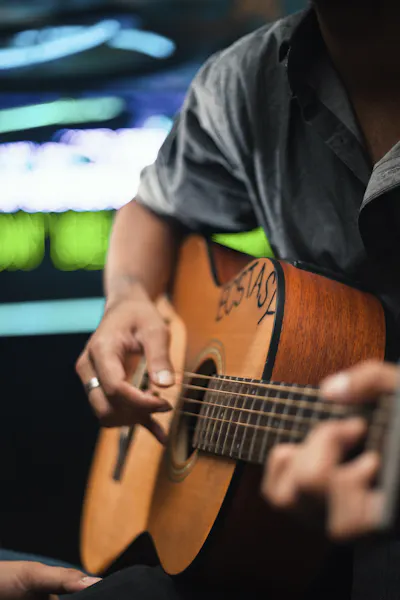
Guitar or an instrument
Record ten seconds of the passage you're working on, at tempo, every few sessions. Not the whole song.
Log the metronome speed. It's the clearest number available and it moves in a way you can see — "I was at 60 and I'm at 95" is more convincing than any feeling about progress. Note which fingering you're using, because you'll change it and forget you did.
A language
Record yourself speaking unscripted for thirty to sixty seconds, on a prompt you haven't prepared. The temptation is to record something rehearsed; resist it, because rehearsed speech doesn't show fluency and unrehearsed speech shows it immediately.
Keep the prompt the same every month — "describe your day" works — so you have a like-for-like comparison. Log the words you reached for and couldn't find. That list becomes your study list, and it's far more useful than a generic vocabulary deck.
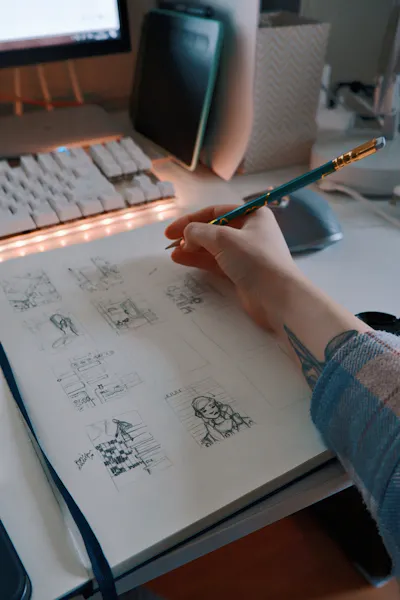
Drawing or design
Photograph the work, obviously. But also record thirty seconds explaining what you were trying to do and where it went wrong. The explanation is what tells you, later, whether your eye improved or just your hand.
Keep a repeated subject. Draw the same hand, or the same mug, once a month. Different subjects every time make the comparison impossible, which is the most common reason art progress feels invisible.
Coding
Written notes do more of the work here, since most of what changes is invisible.
Log what you got stuck on and how long it took to unstick. The headline metric isn't what you built — it's how fast you recover from being stuck, and that improves dramatically and silently. Keep the first version of a project you rewrite; reading your own code from three months ago is a blunter progress report than any journal entry.
A short video explaining what you built and why is worth it occasionally. Being able to explain a system clearly is its own skill and it lags the ability to build one.
Speaking and presenting
Record every practice run, keep them all, watch them the same day. This is the skill where video is least optional, because the entire output is audio-visual.
Count filler words. Note where they cluster. Mine landed at the start of sentences, which told me the problem was committing to an opening rather than vocabulary. That's the kind of thing one rewatch tells you and a year of self-assessment doesn't. The longer account is in record yourself to improve speaking.
A fitness skill
For a movement rather than general fitness — a lift, a handstand, a stroke — film the movement itself from the same angle each time. Form change is extremely hard to feel and extremely easy to see.
Log the number, whatever it is, plus one sentence on how the movement felt. Numbers and form move independently: your lift can go up while your technique gets worse, and only the video shows that.
How often
Every session, if sessions are a few times a week. Daily, if you practise daily. Weekly at minimum, or the log stops being able to tell you which weeks moved.
The demo recording doesn't need the same frequency. Once a week is plenty, and once a month is enough for slower skills like drawing or a language.
What does need scheduling is review. Put a note at day 30 and day 90 to watch your baseline next to your current attempt. Without that, you've built an archive rather than a feedback loop, and the archive on its own won't tell you anything.
Keep one skill per journal
If guitar, Spanish and the gym all share one log, you lose the thing you came for. A strong month of guitar and a dead month of Spanish average into a vague sense that things are "going okay," and neither comparison stays clean.
One skill, one series, its own timeline. When one goes quiet the others still read as moving. More on why in why one goal per journey makes progress easier to see.
The failure mode to avoid
Logging instead of practising.
A practice journal that takes fifteen minutes will start eating the practice session, and then it gets dropped — usually along with the practice. Keep it to a minute, keep it right after the session while it's still in your head, and accept that a rough log is what you're aiming for.
The point isn't the record. The point is that in three months you'll be able to watch your first attempt and see exactly how far it moved, instead of having to take your own word for it.