
Guide
How to Document Personal Progress (5 Methods That Work)
Notes, photos, measurements, video and milestone comparisons each capture something different. How to pick one, what to record, and how often.
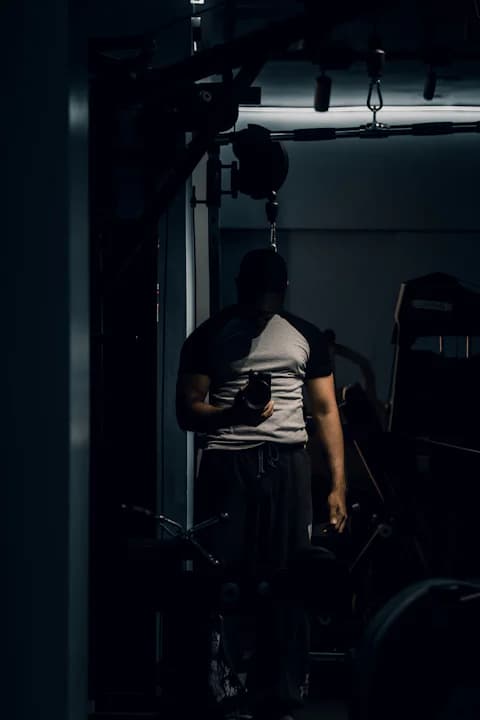



Documenting progress comes down to one thing: capturing where you are now, in a form your future self can compare against. Everything else is a detail of which form and how often.
The reason to bother is that you can't do the comparison from memory. Your sense of "how I used to be" quietly updates to match how you are today, which means the baseline you'd compare against doesn't survive. A record does.
This is a practical walk through five methods, what each one is good and bad at, and how to set one up this week.
Start with the baseline, not the system
The most common mistake is spending a week choosing a method and never capturing a starting point.
A baseline recorded badly is worth more than a perfect system started in March. Whatever method you pick, capture today first:
- Where you are right now, in whatever terms fit: what you can do, what it looks like, what the number is.
- What you're trying to change, and by when.
- How it currently feels, which is the part you'll forget most completely.
That's your Day 1. Its only job is to exist.
The five methods
1. Written notes
A sentence or a paragraph per session or per day.
Good at: thinking something through, capturing why you made a decision, recording detail that has no visible form. Searchable later, which none of the others really are.
Weak at: showing change. Reading an old entry tells you what you thought, not what you were like. Writing also flattens tone — you can describe feeling discouraged, but the words look the same whether you were mildly tired or genuinely ready to quit.
Use it when the thing you're tracking is mental: decisions, reasoning, what you learned.
2. Photos
A photo at a fixed interval, from a fixed position.
Good at: physical change, cheaply. Takes two seconds. The comparison is immediate and hard to argue with.
Weak at: anything that isn't surface appearance. A photo can't show how you move, how you sound, or whether you were confident that day. Consistency also matters more than people expect: different lighting, time of day or angle can swamp a month of real change.
Use it when the change is visible and you want the lowest-effort option. Same spot, same light, same time of day.
3. Measurements and numbers
Weight, reps, minutes practised, words learned, revenue, pages written.
Good at: being objective. A number doesn't flatter you, and it makes trends calculable.
Weak at: capturing anything the number doesn't measure, which is usually the interesting part. Numbers also move non-linearly and noisily, so a bad fortnight can look like failure when it's normal variance. And they're easy to optimise for instead of the actual goal.
Use it when there's a genuinely meaningful number. Alongside something else, not alone.
4. Video check-ins
A short recording of yourself, in date order.
Good at: capturing the things the other methods lose. Tone, face, energy, how you hold yourself, how fluently you explain something. It's also the fastest to produce — talking for thirty seconds takes less effort than writing three sentences, which matters on day forty.
Weak at: searchability. You can't skim twelve weeks of video the way you can skim a notebook, so you need some structure to find things. Storage adds up. And it takes a few entries before most people stop performing for the camera.
Use it when the change has any visible or audible dimension, or when you've bounced off writing before.
5. Milestone comparisons
Not a daily method — a deliberate side-by-side at fixed points. Day 1 next to Day 30, Day 90, today.
Good at: the actual job. This is where documentation pays out, and it's the step most people skip. Capturing material and never reviewing it gives you an archive, not feedback.
Weak at: nothing, except that it depends on having captured a baseline. It's a review habit rather than a recording habit.
Use it when always. Pair it with whichever of the four above you choose.
Picking one
A rough guide:
- Fitness or physical skill — photos plus short video, with numbers if they're meaningful.
- Speaking, language, an instrument — video, clearly. The change is audible, so an audio-visual record is the only one that captures it.
- A business or a project — written notes for decisions, numbers for outcomes.
- General personal growth, confidence, how you handle things — video check-ins. This is the area where nothing else works well, because there's no number and no photograph of being less anxious.
If you can't decide, pick video and write a sentence under it. That covers most of the ground.
How often
Less often than people plan, more often than they manage.
- Daily suits short entries during an active push: a thirty-day challenge, the first month of something new.
- Two or three times a week is more realistic for a goal measured in months, and it's enough for the comparison to work.
- Weekly is the minimum that still produces a usable record.
The frequency that matters more is review: look back at day 7, day 30, and day 90. Not daily. Checking every day is what makes progress feel absent, because the change per day is too small to see.
Keep goals separate
If one log holds everything, the record blurs. A strong month of training and a stalled side project average out into "fine, I think," and you lose the ability to see either clearly.
Give each goal its own series. When one is quiet the others still read as moving, and each before-and-after stays clean. More on that in why one goal per journey makes progress easier to see.
A setup you can do today
- Pick one goal. Not three.
- Choose a method from above, and a day and time you'll do it.
- Capture the baseline today, badly if necessary.
- Put a reminder in your phone for day 7, day 30 and day 90 that says "compare with Day 1."
- Don't delete early entries. They're embarrassing and they're the whole asset.
The mistake worth avoiding
Documenting instead of doing.
It's possible to build an elaborate tracking system and use it as a substitute for the work. If the record takes longer than a couple of minutes, it'll start competing with the thing it's meant to measure, and the record is what gets dropped.
Keep it small enough that a bad day can't end it. Thirty seconds, same time, same place. The point is not the documentation. The point is that in three months you'll have something to compare against, and you won't have to take your own word for whether anything changed.
If you want the video version of this specifically, how to start a video journal covers the practical setup, and how to stay consistent covers the part that's actually hard.