 Jourvelope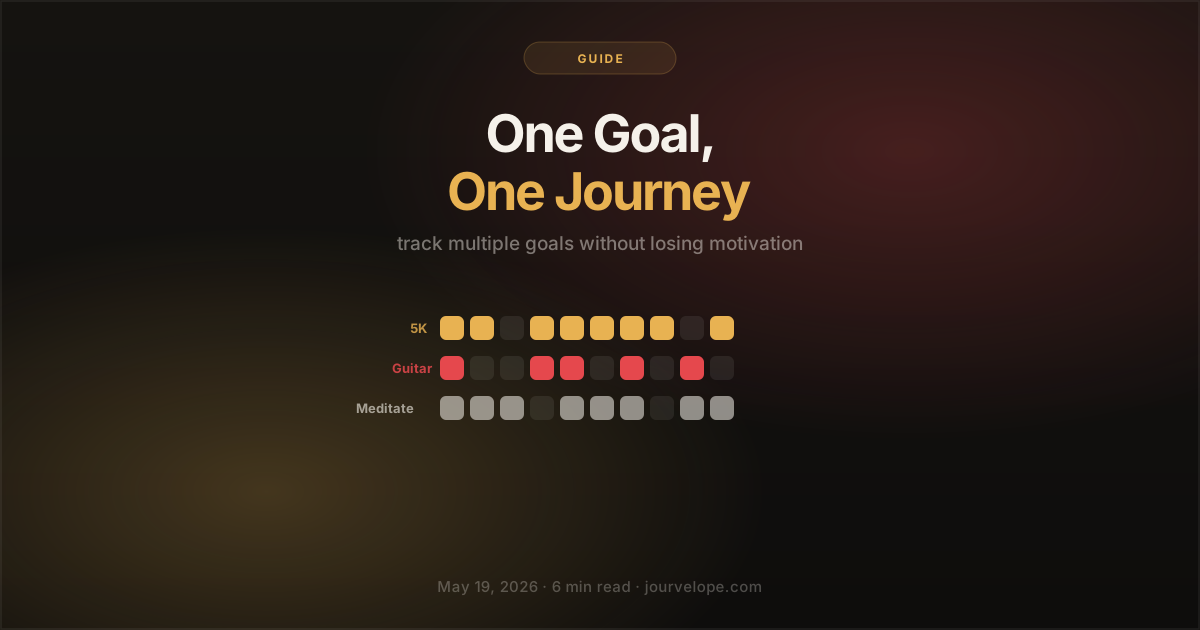
The One Goal, One Journey Method: How to Track Multiple Goals Without Losing Motivation
Chasing more than one goal at once? Here's how separating each goal into its own video journey keeps your goal tracking honest.
Most goal-tracking systems fall apart the moment you're chasing more than one thing at a time. Running a 5K, learning guitar, and building a meditation practice all end up in the same notes app, the same streak counter, or the same undifferentiated pile of entries — and within a month it's impossible to tell which goals you're actually keeping up with.
Why mixing goals kills motivation
When every goal shares one tracker, a bad week on one goal drags down your perceived progress on all of them. Miss three days of guitar practice and your "overall" streak resets, even though your 5K training didn't slip at all. This is demotivating in a very specific way: it punishes progress on goals you're actually keeping up with because of ones you're not.
The fix: one journey per goal
The solution is structural, not motivational. Give every goal its own dedicated space — its own streak, its own day grid, its own history — so progress on one goal is never contaminated by another. In Jourvelope, this is literally how the app is built: every goal becomes its own journey, with its own video journal entries and its own visual habit tracker.
What this looks like in practice
- Running a 5K gets its own journey: a day grid tracking training runs, with entries capturing how each run felt.
- Learning guitar gets a separate journey entirely — a different streak, a different grid, unaffected by how the running is going.
- A meditation habit gets its own journey too, so a stressful week that disrupts meditation doesn't read as failure on the other two goals.
Each journey answers one question honestly: am I actually keeping up with this specific thing? Instead of one blurry answer across everything you're trying to do.
Managing more goals than you can track by memory
Once you're running three or four journeys simultaneously, the day grid becomes more useful than any to-do list, because it shows you — at a glance — exactly which goal is slipping before it turns into a fully broken streak. That earlier warning is what actually lets you course-correct instead of discovering a month later that you quietly gave up on something.
Getting started
If you're currently tracking multiple goals in one place — one journal, one habit-tracking app, one spreadsheet — try splitting them into separate journeys instead. For the reasoning behind why visual, separated tracking works better than a shared counter, see the psychology of streaks.